

Hey there! I'm a guy running a sheet metal supply business. One of the most common headaches in our line of work is dealing with spring-back in sheet metal bending. In this blog, I'm gonna share some tips on how to compensate for it.
Understanding Spring-Back
First off, let's talk about what spring-back is. When you bend a piece of sheet metal, it doesn't stay in the exact shape you bend it to. After you release the pressure, the metal springs back a little bit. This is due to the elastic properties of the metal. Different metals have different levels of spring-back. For example, stainless steel tends to have more spring-back compared to aluminum.
The amount of spring-back depends on several factors. The type of metal, its thickness, the bend radius, and the bending method all play a role. Thicker metals generally have more spring-back, and smaller bend radii can also increase the amount of spring-back.
Measuring Spring-Back
Before you can compensate for spring-back, you need to know how much it is. One way to measure it is to bend a test piece of the same metal and thickness. After bending, measure the actual angle of the bend and compare it to the desired angle. The difference between the two is the spring-back angle.
Another method is to use a strain gauge. This device can measure the strain in the metal during bending. By analyzing the strain data, you can get a more accurate understanding of the spring-back behavior.
Compensating for Spring-Back
Now, let's get to the good stuff - how to compensate for spring-back. There are several methods you can use.
Overbending
One of the simplest ways is overbending. This means bending the metal past the desired angle so that when it springs back, it ends up at the correct angle. The amount of overbending depends on the spring-back angle you measured earlier. For example, if you measure a spring-back angle of 5 degrees, you would bend the metal 5 degrees more than the desired angle.
However, overbending has its limitations. If you overbend too much, the metal may crack or deform. So, it's important to find the right balance.
Adjusting the Tooling
Another way to compensate for spring-back is to adjust the tooling. You can use a die with a smaller radius than the desired bend radius. This will increase the amount of deformation in the metal, which can help reduce the spring-back.
You can also use a punch with a different shape. For example, a punch with a rounded tip can help distribute the force more evenly, reducing the spring-back.
Using Heat
Heat can also be used to reduce spring-back. By heating the metal before bending, you can make it more malleable. This reduces the elastic properties of the metal, which in turn reduces the spring-back.
However, heating the metal requires careful control. If you heat it too much, the metal may lose its strength or develop other problems. So, it's important to use the right temperature and heating time.
Case Studies
Let's look at a couple of case studies to see how these methods work in real life.
Case Study 1: Overbending
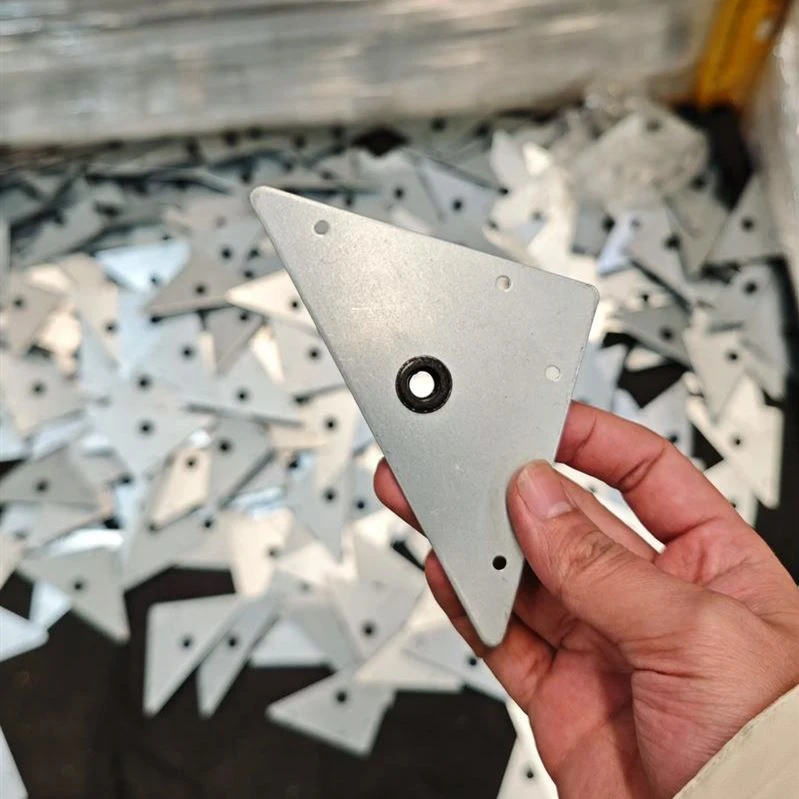
We had a customer who needed a batch of Prototype Sheet Metal Parts with a specific bend angle. After measuring the spring-back angle, we overbent the parts by the appropriate amount. The result was that the parts ended up at the correct angle after spring-back.
Case Study 2: Adjusting the Tooling
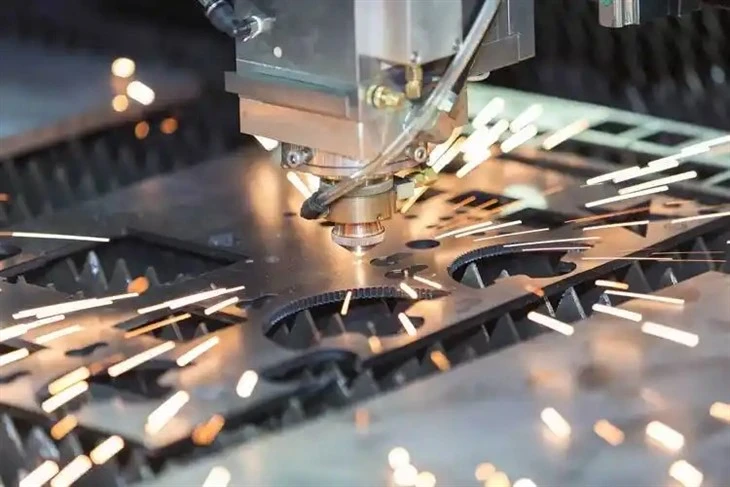
Another customer needed Laser Cut Metal Parts with a tight bend radius. We adjusted the die to have a smaller radius than the desired bend radius. This helped reduce the spring-back and the parts met the customer's specifications.
Conclusion
Compensating for spring-back in sheet metal bending is a challenging but important task. By understanding the factors that affect spring-back, measuring it accurately, and using the right compensation methods, you can produce high-quality sheet metal parts.
If you're in the market for sheet metal parts, whether it's Prototype Sheet Metal Parts, Laser Cut Metal Parts, or Metal Plate Laser Cutting, we're here to help. Contact us to discuss your requirements and let's work together to get the best results.
References
- "Sheet Metal Forming Handbook" by David A. Dieter
- "Manufacturing Engineering and Technology" by Serope Kalpakjian and Steven R. Schmid


